
The fate of the ministerial conference was sealed after assistant US trade representative Sharon Bomer Lauritsen said permanent solution to the food stockholding issue was not acceptable to America.

A public interest litigation was filed on Saturday in the Supreme Court seeking quashing of controversial Food Security Ordinance on the ground that the constitutional provision has been misused for pre-election propaganda and political gains.

The government on Wednesday sought public comments on the draft National Food Security Bill, which seeks to provide a legal entitlement to subsidised foodgrains to 75 per cent of the country's rural population and 50 per cent of urban India.

Food bill, which is dubbed as the world's largest social welfare programme, aims to give legal right over an uniform quantity of 5 kg foodgrains at a fixed price of Rs 1-3 per kg via ration shops to 67 per cent of the population.

All eyes are on the Bharatiya Janata Party's National Executive that will be held in Goa over the weekend. Speculations are rife that Gujarat Chief Minister Narendra Modi may be made the party's campaign committee chief for the 2014 Lok Sabha elections.

BJP MP Anurag Thakur believes PM Modi's purchase of 'jhalmuri' in Jhargram will influence the West Bengal Assembly polls, contrasting it with CM Mamata Banerjee's actions. He also criticised the TMC government for blocking central schemes and failing to ensure women's safety.

Rising living expenses, fear of contract hiring cast shadow on real gains.

'In West Bengal, the BJP's ideology of Hindutva will be customised to cater to the culture and the cultural imperatives of Bengalis.'

If TVK MLAs and ministers are perceived as clean, or demonstrably cleaner than their predecessors, the credibility dividend will be enormous. The voter will feel rewarded, points out Ramesh Menon.

The bill, considered by many in the Congress as a gamechanger which could boost its prospects in the Lok Sabha election, was tabled in the Budget Session but could not be taken up for discussion as Opposition stalled Parliament over a rash of scams under United Progressive Alliance.
While the Delhi and Haryana governments have declared that they are all set to roll-out the food security programme on August 20 -- Rajiv Gandhi's birth anniversary -- there is confusion among the chief ministers about the implementation of the ordinance which gives the right to people to receive adequate quantity of food grains at affordable prices. Anita Katyal reports.

This comes a day after President Droupadi Murmu gave her assent to the Viksit Bharat Guarantee for Rozgar and Ajeevika Mission (Gramin) (VB-G RAM G) Bill, which replaces the MGNREGA and has a provision for 125 days of wage employment for rural workers.

Making it clear that he was not opposed to the National Food Security Bill, Union Agriculture Minister Sharad Pawar on Friday said he would prefer it to be approved by Parliament after a debate.

Karex, the Malaysian company that makes roughly one in five of the world's condoms -- about five billion a year, supplying Durex and Trojan among others -- announced this week that it is raising prices by up to 30 percent. The reason is the Strait of Hormuz.

Dismissing the talk about early elections, the Congress said the food security measure is a game changer that will provide right to cheap food grains to 82 crore people.

The food security Bill is likely to adopt a three-pronged strategy to ensure food for all, particularly for the most vulnerable sections of the society. The National Advisory Council (NAC) in its initial discussions on the Bill had talked about a universalised scheme.

In a narrow 218-214 vote, the United States House of Representatives on Thursday passed President Donald Trump's massive $4.5 trillion tax and spending bill -- his signature second-term policy package -- just ahead of the July 4 deadline.
Might discuss Ordinance route tomorrow, note circulated among ministers listing discussion topics.
Countering the government's and Congress' allegations that the National Democratic Alliance has been an irresponsible and disruptive opposition, the Bharatiya Janata Party on Thursday said the Manmohan Singh led government is not keen on passing the Food Security Bill and the Land Acquisition Bill. The main opposition also picked holes in the UPA report card on its performance in the last four years and said it is making false claims of success.
Providing cheap rice and wheat to 67.5% population would raise subsidy bills 45% to up to Rs 1.3 trn, and the country.
Stating that the food subsidy bill is becoming "unmanageably large", the Economic Survey 2021 on Friday suggested the government to increase the selling price of foodgrains provided through ration shops to over 80 crore beneficiaries. Foodgrains via ration shops are supplied at highly subsidised rates of Rs 3 per kg for rice, Rs 2 per kg for wheat and Rs 1 per kg for coarse grains through Public Distribution System (PDS) as per the National Food Security Act (NFSA). "While it is difficult to reduce the economic cost of food management in view of rising commitment towards food security, there is a need to consider the revision of central issue price (CIP) to reduce the bulging food subsidy bill," the survey said.

Will rising tensions between US-Israel and Iran threaten crude oil supply through the Strait of Hormuz, putting India's fuel prices, imports, and economic stability at risk?
Setting a tough condition before the government, the Bharatiya Janata Party on Tuesday said it will not allow the passage of any bill in Parliament till Railway Minister Pawan Kumar Bansal and Law Minister Ashwani Kumar resign or are sacked. The opposition party also made it clear that it will not allow the passage of either the National Food Security Bill or the Land Acquisition Bill.

Ahead of the Monsoon session of Parliament, former Congress ally Dravida Munnetra Kazhagam on Monday indicated its support to the UPA's 'game-changer' Food Security Bill even though it has wanted a few changes in it.

The government's move to issue an ordinance to implement the Food Security Bill saw major opposition parties stepping up their attack on the United Progressive Alliance accusing it of bypassing Parliament and acting in a hurry with an eye on polls.
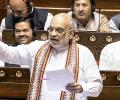
In his notice to the chairman of the Rajya Sabha, the Congress leader alleged that the home minister had made unfounded allegations against chairperson of Congress parliamentary party with "a premeditated motive to malign her reputation."

In a culture where children take up the profession of their father, her becoming a politician was seen as natural and acceptable.

The Centre's move on Chandigarh has raised the hackles of various parties in Punjab, with Aam Aadmi Party national convener Arvind Kejriwal terming it as a "direct attack" on Punjab's identity and constitutional rights.
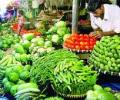
Main difference has been on including people above the poverty line in the Food Security Bill.
Congress Vice President Rahul Gandhi on Tuesday attacked critics of the Food Security Bill which was passed by Parliament last week, saying money spent on providing meals to the poor cannot be called "wastage" of financial resources.
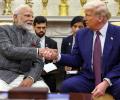
'India's farmers will be unable to compete with the US, given the subsidies that the latter provides its farmers.'

'What the US appears to be doing is to force India to be "the buyer of last resort", on whom their products can be dumped, 1.4 billion people have to eat something, so why not eat American corn?' 'What is exercising the Trump lot is the fact that most of the farms are in solidly Republican Midwestern states: Illinois, Indiana, Kansas, Michigan, Minnesota, Missouri, Nebraska, North Dakota, Ohio, South Dakota, Wisconsin,' points out Rajeev Srinivasan.
Almost no legislative business was transacted making it the worst session of Parliament ever. Devika Malik lists the options out of the current impasse
Is she, like the AIADMK's Jayalalithaa with the Vajpayee government in 1998, playing bully to a government that she knows cannot survive without her Parliamentary support? Or is there a greater scheme behind her erratic actions? Discussing the mercurial Mamata Banerjee on the Rediff Chat is Senior Editor Indrani Roy, a long-time watcher of Bengal and Mamata politics.
It is unusual for Congress chief ministers to say no to Congress Party President Sonia Gandhi, but some of them have gathered the courage to oppose Gandhi's dream project.

Nationalist Congress Party Supremo and Agriculture Minister Sharad Pawar has dismissed the possibility of early general elections in view of government issuing food security ordinance, saying the "question does not arise unless and until the food reaches the people".

The stock and foreign exchange markets have had a negative reaction to the government's biggest social security programme, the National Food Security Bill. Food minister K V Thomas questions the rationale behind such a response

A heavy agenda including the ordinance on the Food Security Bill awaits the Monsoon session of Parliament beginning on Monday amid expectations that the short sitting will be more businesslike and smooth as compared to the din and dust in the last few sessions.

Lending her support to Donald Trump's leadership prowess, the Italian PM said that the Left Wing is nervous about leaders from conservative parties winning and collaborating globally.
A much stronger focus was required on irrigation and water management. The FM merely acknowledged that it was a problem.
